Next Friday or This Friday: What’s the Real Difference?

Next Friday or This Friday: What's the Real Difference?

  Next Friday or This Friday “This Friday” means the coming Friday in the current week. “Next Friday” means the Friday after that one full week later. The confusion between these two phrases causes real scheduling mix-ups every day, so knowing the difference matters. Key Takeaways “This Friday” refers to the nearest upcoming Friday, within … Read more

Better Than Or Better Then- Which Is Correct?

Better Than Or Better Then: Which Is Correct?

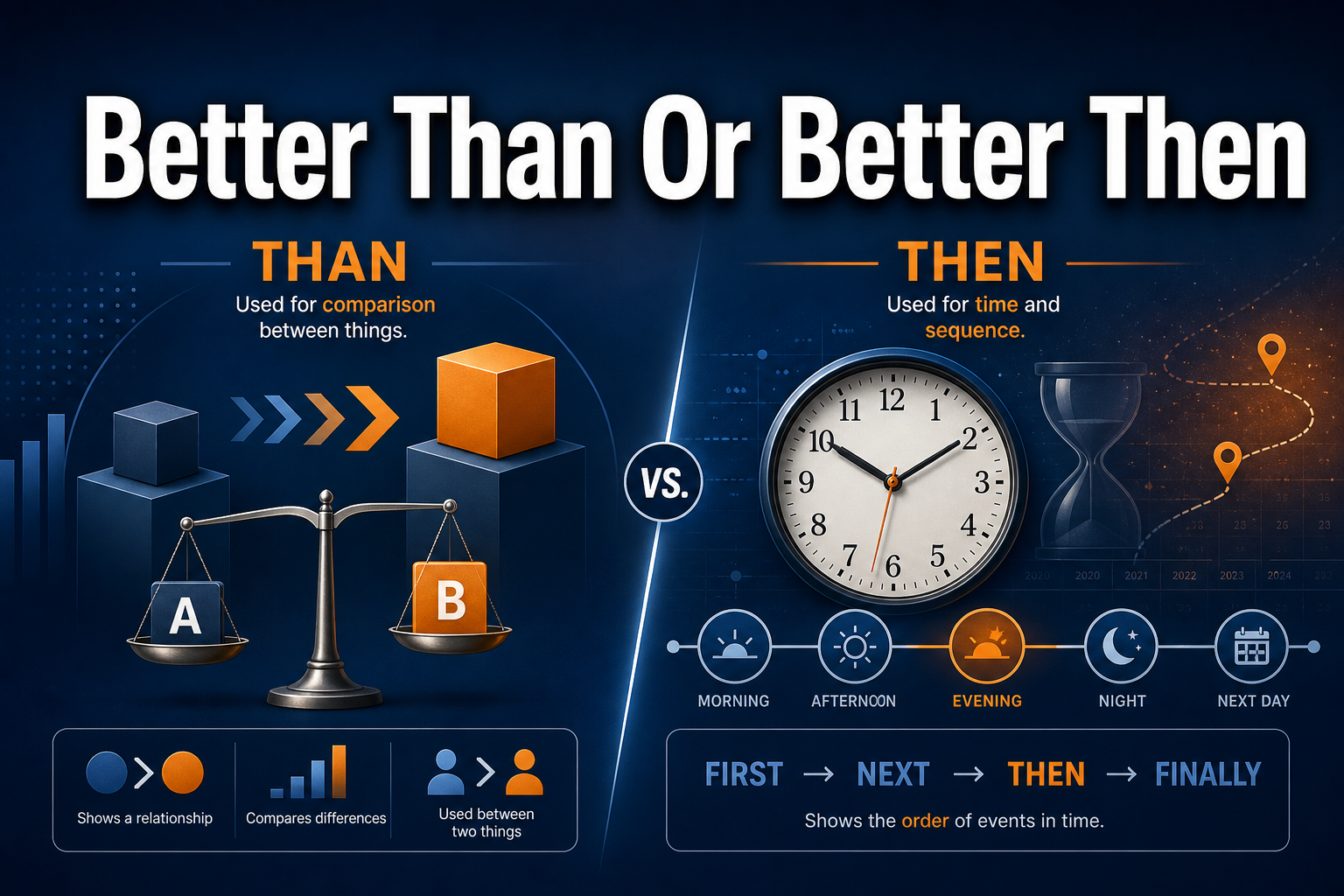
Better Than Or Better Then “Better than” is the correct phrase for making comparisons in standard English. “Better then” is almost always wrong when you’re comparing two things. The word “than” is used for comparisons (like “bigger than” or “faster than”), while “then” refers to time or sequence (like “back then” or “first this, then … Read more

Its Called Vs It Called- The Grammar Guide You Actually Need

Its Called Vs It Called: The Grammar Guide You Actually Need

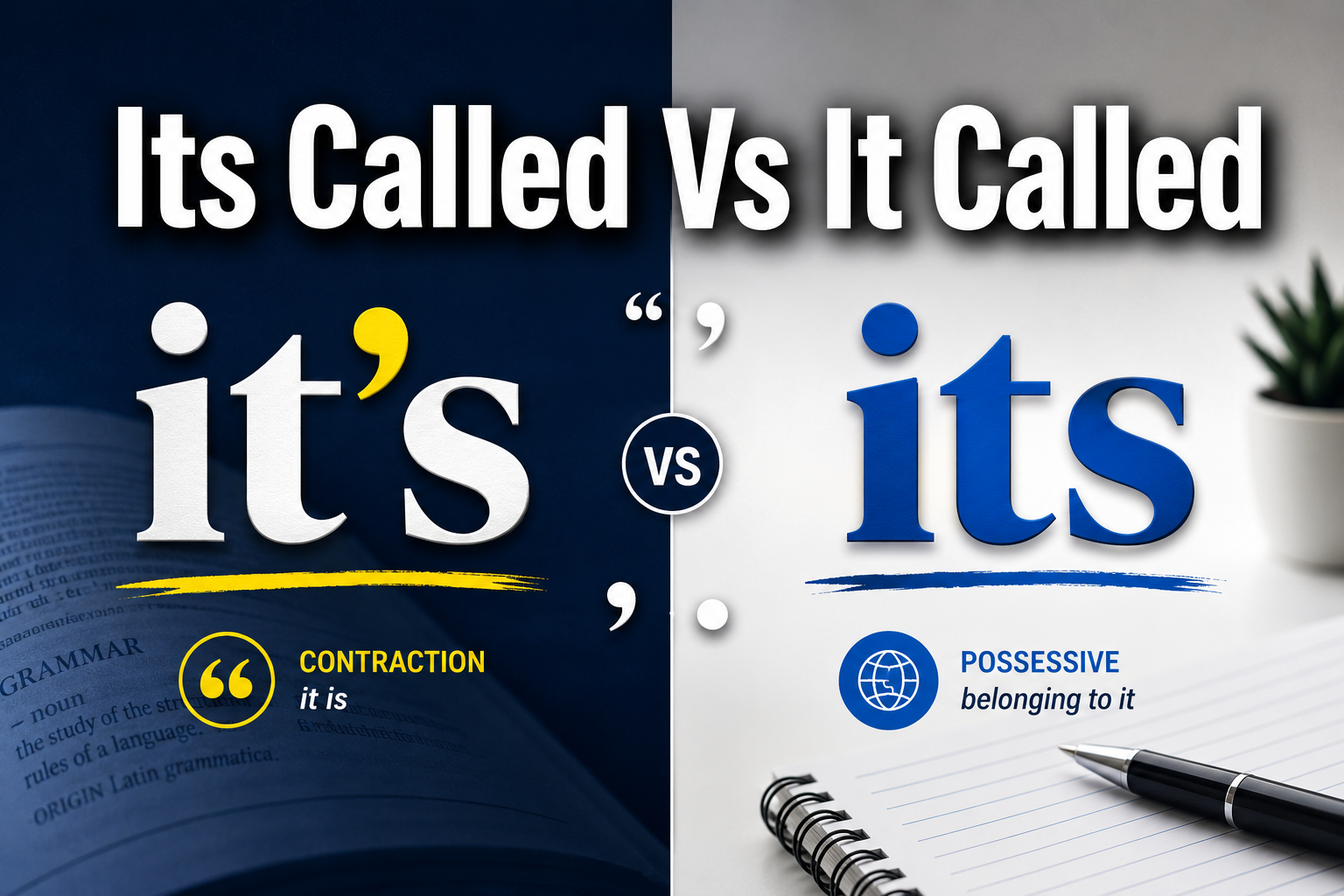
Its Called Vs It Called “It’s called” is the correct phrase when naming or identifying something, because “it’s” is a contraction of “it is.” For example, “It’s called a smartphone” means “It is called a smartphone.” The phrase “it called” is grammatically different it’s the past tense form used when describing an action that “it” … Read more

What Does NFS Mean In Text? A Complete Breakdown for 2026

What Does NFS Mean In Text? A Complete Breakdown for 2026

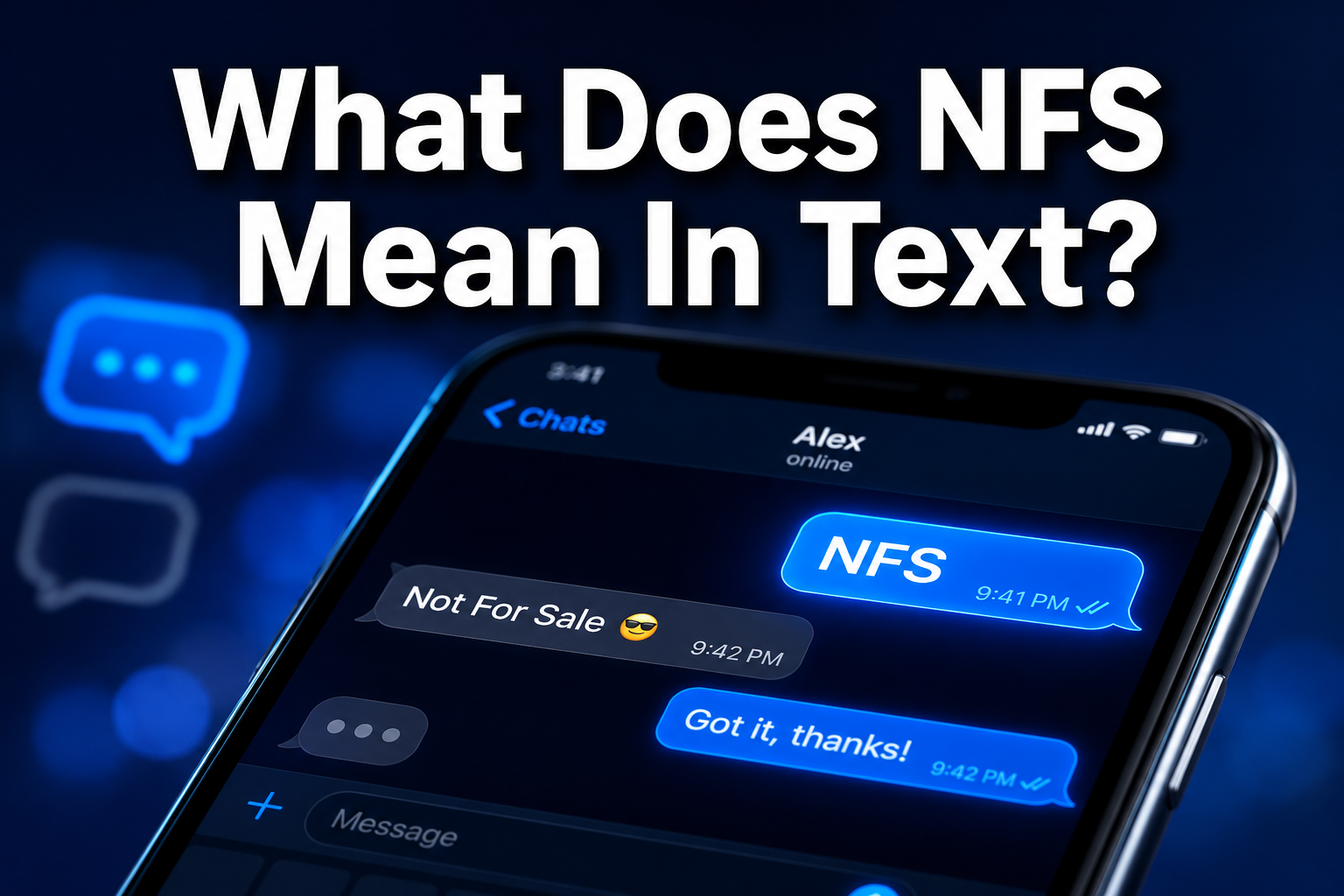
NFS in text most commonly stands for “Not For Sale.” It shows up in online marketplaces, social media posts, and group chats when someone wants to make clear that an item they’re showing off is not available to buy. However, NFS also has several other meanings depending on the platform and context, including “No Funny … Read more

What Does Ionk Mean In Text? The Complete Breakdown

What Does Ionk Mean In Text? The Complete Breakdown

  Ionk is a slang term used in texting and online chat that means “I don’t know.” It is a phonetic spelling of the phrase, written the way it sounds when spoken quickly in casual conversation. You will mostly see it used by Gen Z on platforms like TikTok, Instagram, Snapchat, and in everyday text … Read more

Drier And Dryer- Which Spelling Is Correct?

Drier Vs Dryer: Which Spelling Is Correct?

Drier and dryer are two different words with different jobs. “Dryer” is the noun for a machine that dries clothes. “Drier” is the comparative adjective meaning “more dry.” Knowing the difference between drier vs dryer keeps your writing clear and correct. Key Takeaways What Is the Difference Between Drier and Dryer? “Drier” and “dryer” sound … Read more

Wyrd Meaning: The Complete Guide to the Norse Concept of Fate

Wyrd Meaning: The Complete Guide to the Norse Concept of Fate

  Wyrd (pronounced “weird”) is an Old English and Old Norse concept meaning personal fate or destiny — but it is not fixed. It is the ongoing result of your past actions, your ancestry, and the choices you make right now. Think of it as a living thread being woven in real time, not a … Read more

WTV Meaning In Text: What It Really Means and How to Use It

WTV Meaning In Text: What It Really Means and How to Use It

WTV meaning in text is short for “whatever.” It is used in casual conversations to show indifference, agreement without strong feelings, or mild frustration. Most people use it in text messages, social media comments, and online chats. Key Takeaways WTV stands for “whatever” and is one of the most common texting abbreviations used today It … Read more

Mine As Well Or Might As Well- Which One Is Correct?

Mine As Well Or Might As Well: Which One Is Correct?

  Last updated: June 10, 2026 Quick Answer “Might as well” is the correct phrase. “Mine as well” is a common mishearing and misspelling — it has no grammatical meaning in standard English. When someone says “mine as well,” they almost always mean “might as well,” which expresses that something is a reasonable or logical … Read more

It Is Must Vs It Is A Must-The Correct Usage Explained

It Is Must Vs It Is A Must: The Correct Usage Explained

“It is a must” is grammatically correct. “It is must” is incorrect in standard English. The word “must” works as a noun here, meaning something necessary or essential, so it needs the article “a” before it. Native English speakers always say “it is a must” when something is required or highly recommended. Key Takeaways “It … Read more