More Than Vs More Then- What’s the Difference and Which Is Correct?
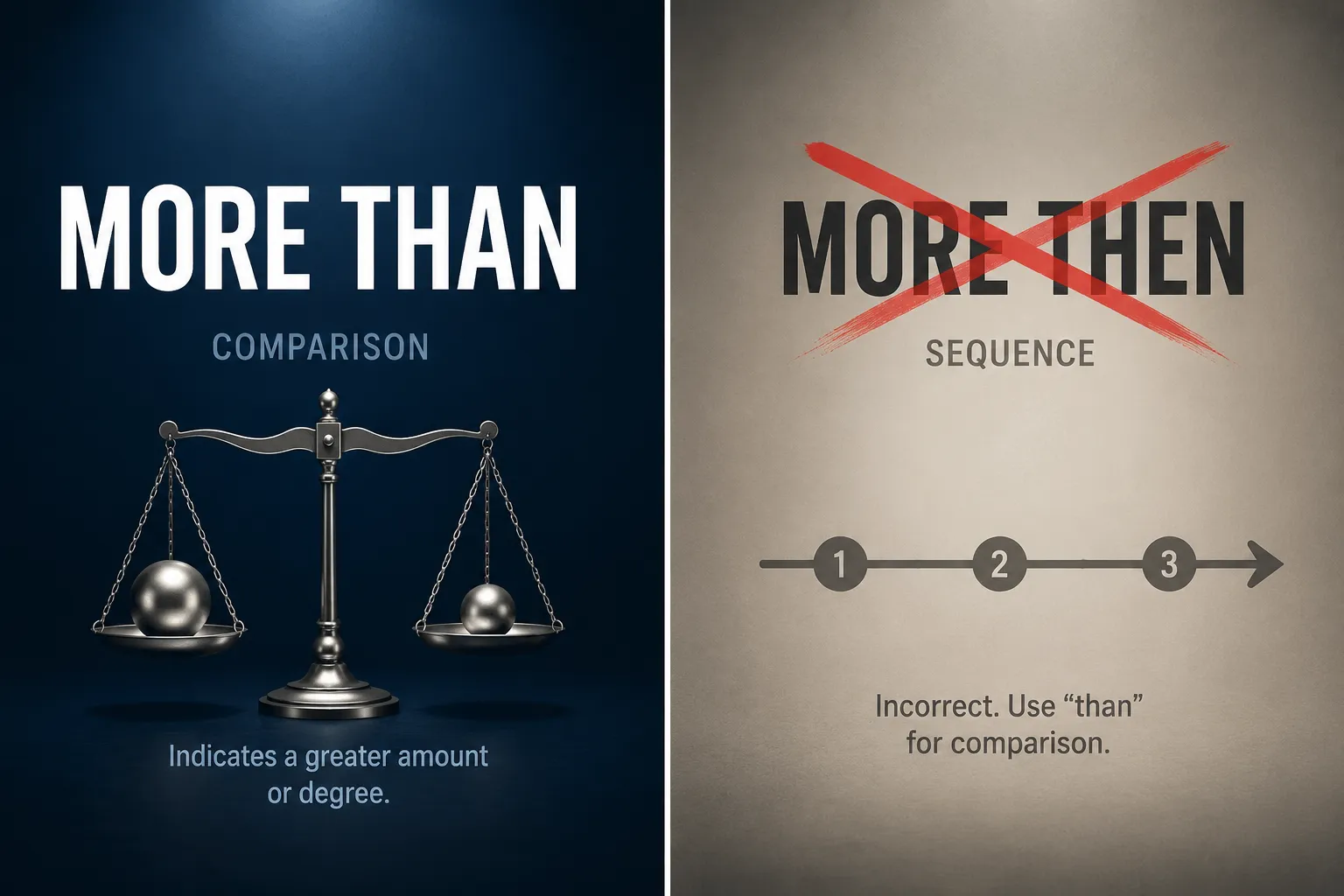
More Than Vs More Then: What's the Difference and Which Is Correct?

  “More than” is almost always the correct choice. It is used to make comparisons, like saying one thing is greater than another. “More then” is a grammatical error in most cases and is not standard English. If you are comparing two things, always use “more than.” Key Takeaways “More than” is a conjunction and … Read more
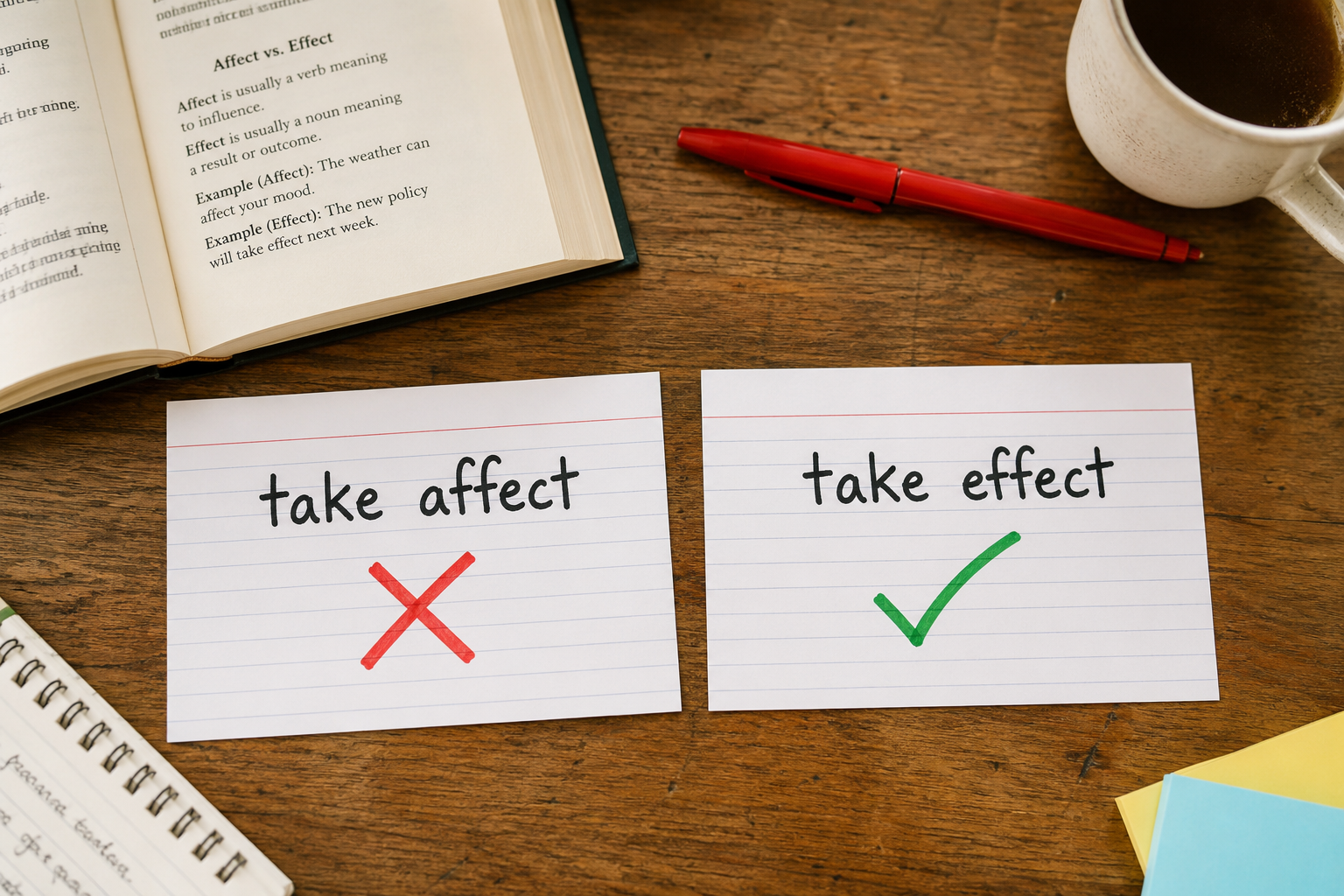
Take Affect Vs Take Effect: Which One Is Actually Correct?

Take Affect Vs Take Effect: Which One Is Actually Correct?

“Take effect” is almost always the correct phrase. It means something begins to work, becomes active, or produces results. “Take affect” is not a standard English phrase and is considered a grammar error in most contexts. If you’re writing about a law, medication, or policy becoming active, always use “take effect.” Key Takeaways “Take effect” … Read more

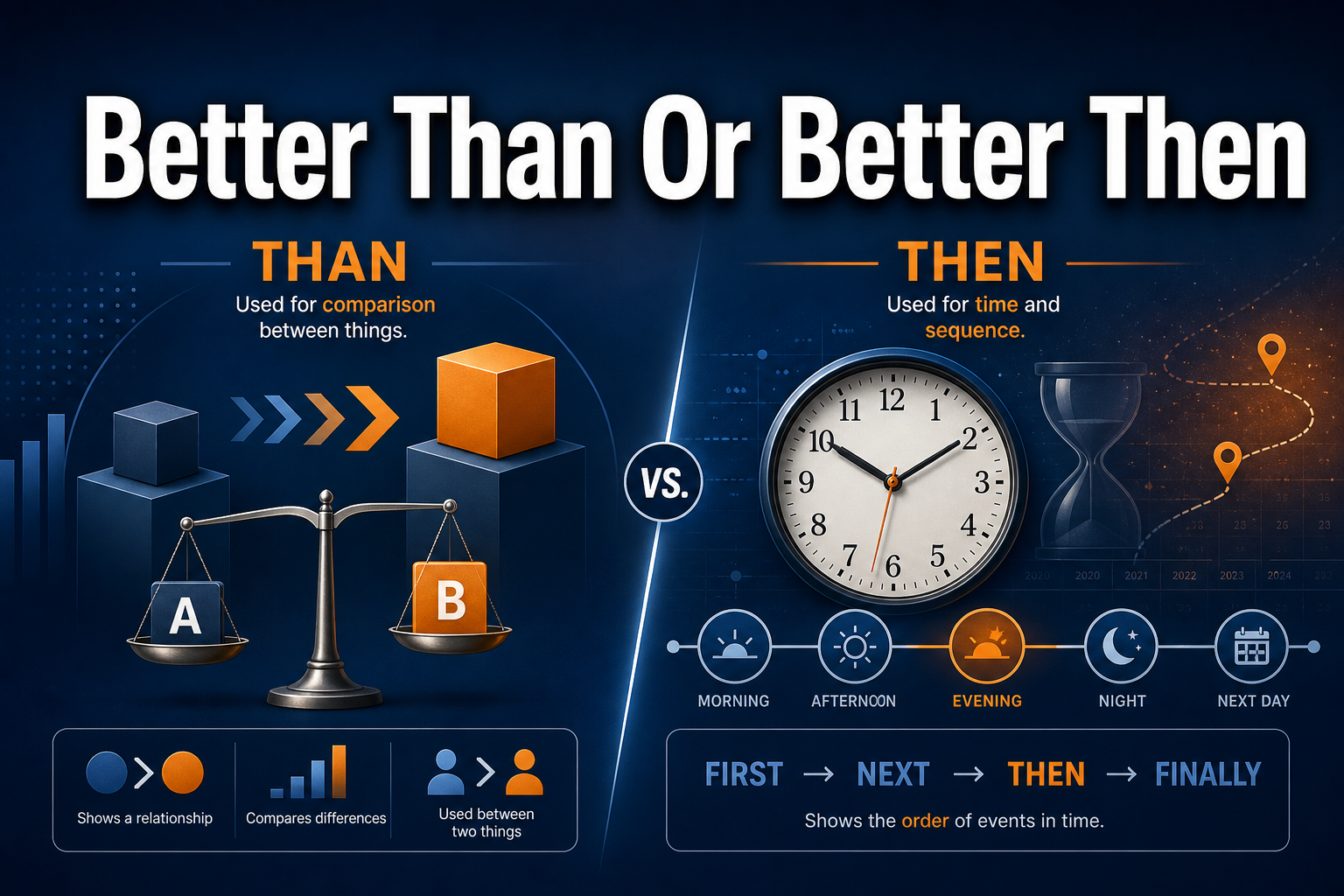
Better Than Or Better Then- Which Is Correct?

Better Than Or Better Then: Which Is Correct?

Better Than Or Better Then “Better than” is the correct phrase for making comparisons in standard English. “Better then” is almost always wrong when you’re comparing two things. The word “than” is used for comparisons (like “bigger than” or “faster than”), while “then” refers to time or sequence (like “back then” or “first this, then … Read more

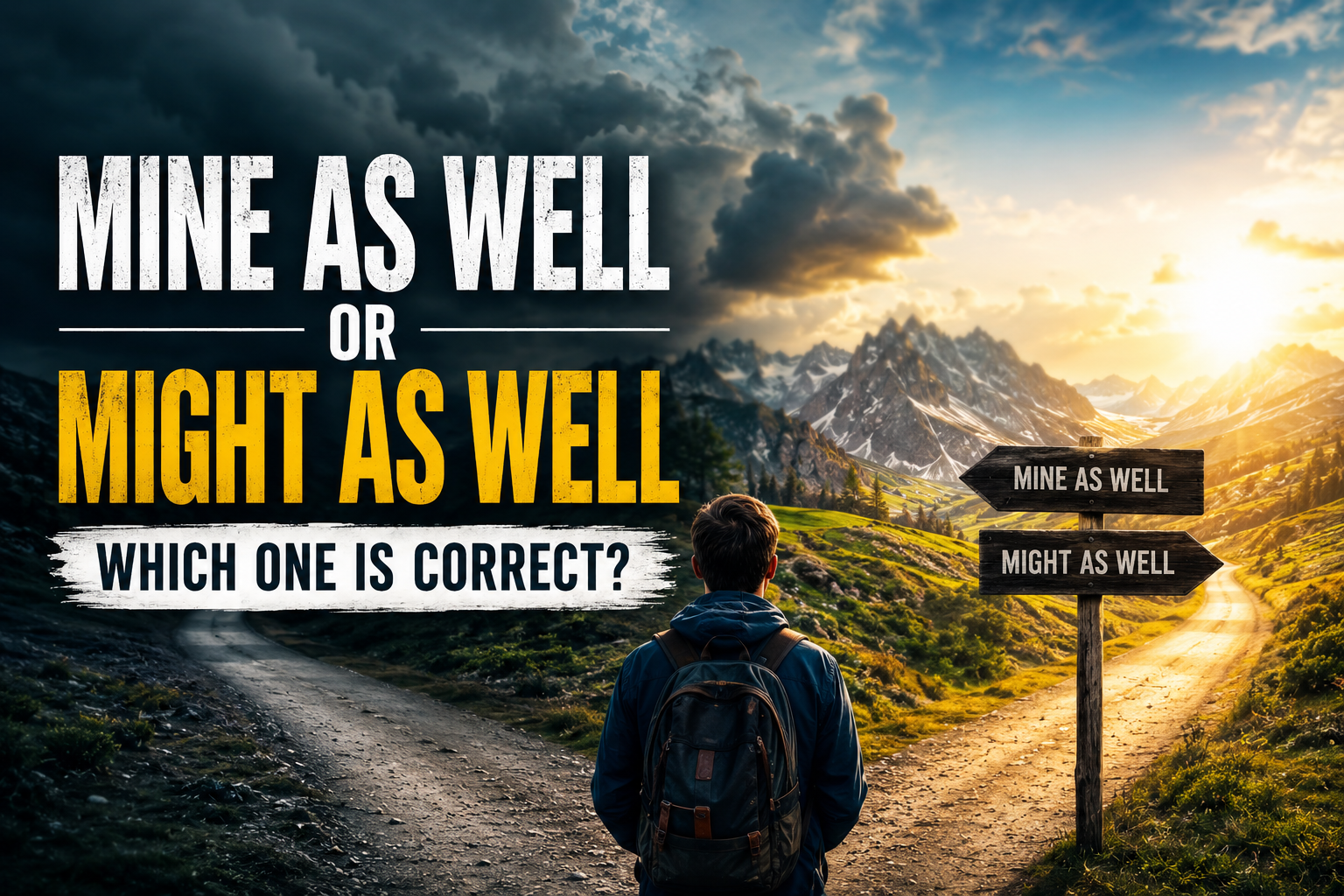
Mine As Well Or Might As Well- Which One Is Correct?

Mine As Well Or Might As Well: Which One Is Correct?

  Last updated: June 10, 2026 Quick Answer “Might as well” is the correct phrase. “Mine as well” is a common mishearing and misspelling — it has no grammatical meaning in standard English. When someone says “mine as well,” they almost always mean “might as well,” which expresses that something is a reasonable or logical … Read more