
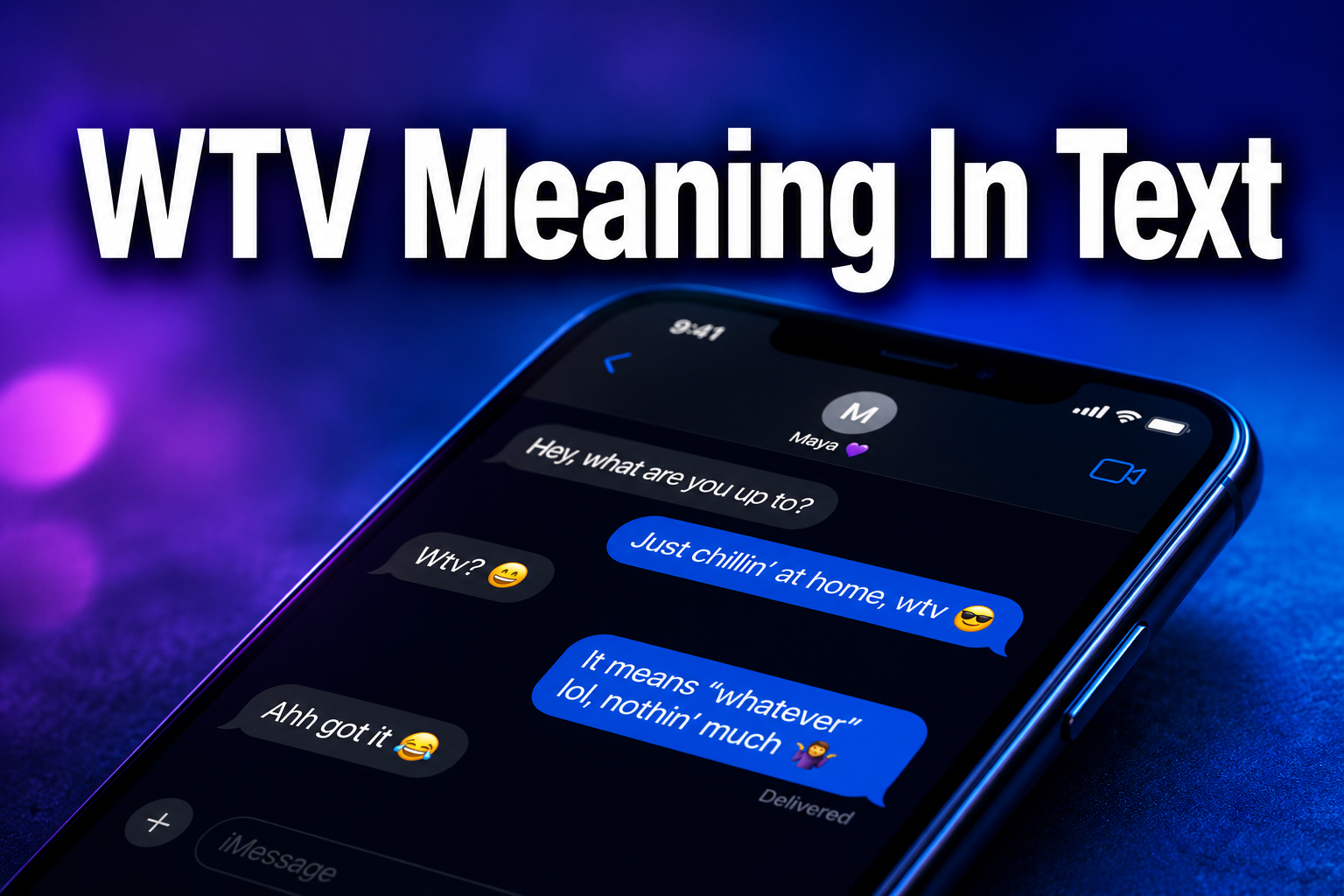
WTV meaning in text is short for “whatever.” It is used in casual conversations to show indifference, agreement without strong feelings, or mild frustration. Most people use it in text messages, social media comments, and online chats.
Key Takeaways
- WTV stands for “whatever” and is one of the most common texting abbreviations used today
- It can signal indifference, casual agreement, or low-level annoyance depending on context
- WTV is strictly casual slang and is not appropriate for professional or work emails
- Younger generations, especially teens and young adults, use WTV most frequently
- WTV and IDC are related but carry different tones — WTV is broader, IDC is more blunt
- There are several alternatives to WTV, including “idc,” “np,” “fine,” or simply “ok”
- Context matters: the same word can mean agreement in one conversation and dismissal in another
- Responding to WTV depends on whether the sender means indifference or frustration
What Does WTV Actually Mean in Text Messages
WTV means “whatever” in text messages. It is a shorthand abbreviation used to express that the sender does not have a strong preference, does not care much about the topic, or is brushing something off.
Here is how it breaks down in practice:
- Indifference: “We can go wherever, wtv works for me.”
- Casual agreement: “Sure, wtv you think is best.”
- Mild frustration or dismissal: “You never listen anyway, wtv.”
The meaning shifts based on tone and conversation context. When someone texts WTV after a disagreement, it often signals they are done arguing. When used in a relaxed planning conversation, it simply means they have no strong opinion.
Is WTV the Same as Whatever
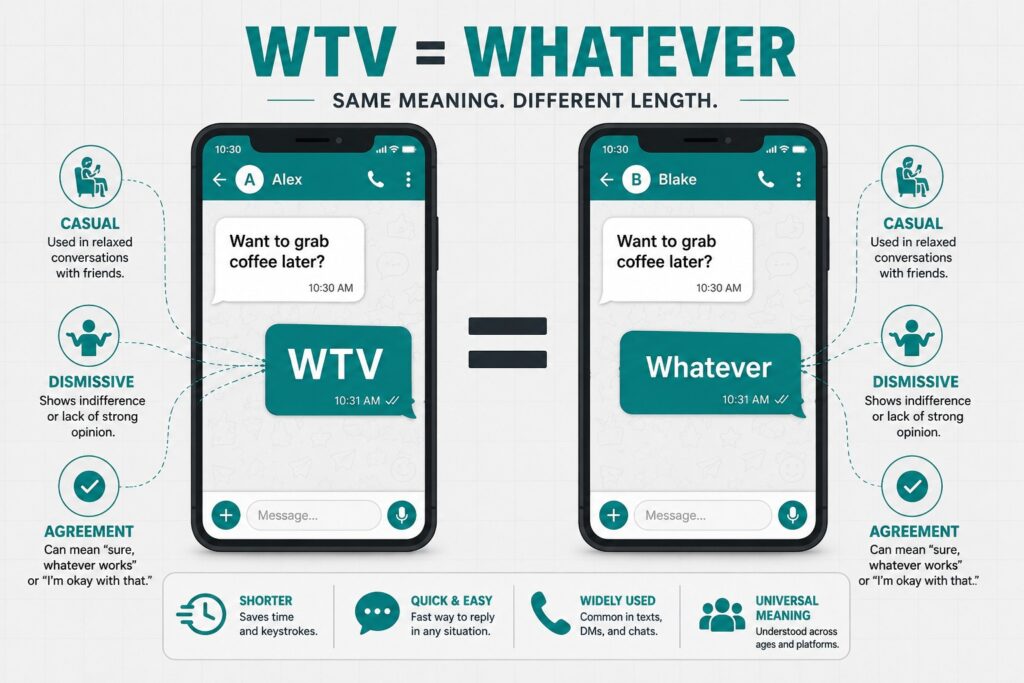
Yes, WTV is a direct abbreviation of “whatever.” The two words carry the same range of meanings. The only real difference is format: WTV is faster to type and fits the pace of text messaging.
“Whatever” itself has a wide emotional range in English. It can be:
- Neutral and agreeable (“whatever you prefer”)
- Passive and dismissive (“whatever, I don’t care”)
- Slightly rude or sarcastic, depending on delivery
WTV carries all of these same tones. Because text messages lack vocal tone, the meaning of WTV depends heavily on what came before it in the conversation.
When Do People Typically Use WTV in Texting
People use WTV most often in three situations:
- Making plans: When someone has no preference about where to eat, what movie to watch, or what time to meet. Example: “Wtv time works for you is fine.”
- Ending a disagreement: When someone wants to stop arguing without fully agreeing. Example: “Fine, wtv, let’s just drop it.”
- Showing casual agreement: When someone accepts a suggestion without strong feelings either way. Example: “Wtv you think, I trust you.”
WTV shows up heavily in group chats, DMs on Instagram or Snapchat, and casual iMessage threads. It is rarely typed out in longer messages because it signals brevity by design.
Are There Different Ways to Use WTV in Conversation
Yes. WTV can function as a standalone response or inside a longer sentence. Both are common.
As a standalone reply:
- “You coming tonight?” / “Wtv.”
Inside a sentence:
- “We can do wtv you want for dinner.”
- “I’ll wear wtv, I’m not picky.”
Some people also pair WTV with other abbreviations for extra effect:
- “Wtv lol” (dismissive but light)
- “Wtv idc” (stronger indifference, almost a double down)
- “Wtv man” (casual, slightly exasperated)
The placement and pairing of WTV changes how strong or soft the indifference feels.
Is WTV Considered Professional or Casual Slang
WTV is casual slang, full stop. It is not appropriate in professional settings such as work emails, business texts, client messages, or formal writing of any kind.
Using WTV in a work context can come across as:
- Unprofessional or careless
- Dismissive toward a colleague or client
- Unclear to someone unfamiliar with texting slang
Rule of thumb: If you would not say “whatever” out loud in that setting, do not type WTV either. Save it for friends, family, and informal group chats.
Is WTV Appropriate for Work Emails
No. WTV is not appropriate for work emails or any professional communication. Even in casual workplace Slack channels or team chats, WTV can read as dismissive or lazy.
If you want to express flexibility or indifference professionally, use phrases like:
- “I’m flexible on this.”
- “Either option works for me.”
- “Happy to go with whatever the team decides.”
These phrases carry the same meaning as WTV but maintain a professional tone.
How Do Different Age Groups Use WTV
Younger people, especially those between 13 and 30, use WTV the most. It fits naturally into the fast, shorthand style of texting that younger generations prefer.
- Teens (13-17): Use WTV constantly, often as a one-word reply in group chats
- Young adults (18-30): Use it regularly in casual texts but may switch to full words in semi-formal settings
- Adults (30-50): Some use it, but many prefer typing out “whatever” or “either works”
- Older adults (50+): Less likely to use WTV and may not recognize it immediately
This is not a hard rule. Digital communication habits vary by person, not just age. But the abbreviation is most deeply embedded in younger texting culture.
Origins of WTV as Text Slang
WTV grew out of the broader trend of abbreviating common words for faster texting. “Whatever” was already a culturally loaded word in the 1990s, popularized by movies and TV shows as a dismissive phrase. As texting became mainstream in the 2000s, shortening it to WTV followed naturally.
The rise of platforms like AIM, early SMS, and later Snapchat and Twitter pushed users toward shorter, faster language. WTV fit that pattern perfectly. By the early 2010s, it was a standard part of texting vocabulary for younger users.
Alternatives to Saying WTV in Texts
If WTV feels too blunt or you want variety, here are common alternatives:
| Alternative | Meaning | Tone |
|---|---|---|
| IDC | I don’t care | Direct, sometimes blunt |
| NP | No preference | Neutral, mild |
| Fine | Acceptance | Can sound resigned |
| OK / K | Agreement | Neutral to slightly cold |
| Up to you | Deference | Polite, warm |
| Either works | Flexibility | Friendly, open |
| IDGAF | Strong indifference | Very casual, crude |
Choose based on how much you want to emphasize your indifference and how close you are to the person you are texting.
Differences Between WTV and IDC
WTV and IDC are related but not identical. Both express indifference, but they carry different weights.
- WTV (whatever): Broader, more flexible. Can mean “I have no preference” or “let’s move on.” Less aggressive.
- IDC (I don’t care): More direct and sometimes blunter. Often used when someone wants to make it clear they are not interested in the topic at all.
Example comparison:
- “Wtv, you pick the restaurant.” (relaxed, no preference)
- “IDC where we go.” (slightly stronger, possibly impatient)
In most conversations, WTV is softer than IDC. If you want to sound easygoing, WTV works better. If you want to firmly signal disinterest, IDC is stronger.
Does WTV Mean Something Different in Other Languages
In English-speaking countries, WTV consistently means “whatever.” However, in non-English texting communities, WTV may not be recognized at all, or it could be confused with other abbreviations.
For example:
- In French texting culture, “wtv” is not a standard abbreviation
- In Spanish, similar shortcuts exist but WTV is not one of them
- On international platforms like TikTok or Twitter, WTV is understood mainly by English-speaking users
If you are texting someone whose first language is not English, it is safer to write out “whatever” or rephrase entirely to avoid confusion.
Common Mistakes People Make When Using WTV
A few patterns trip people up when using WTV:
- Using it in professional messages: As covered above, this can damage your credibility at work
- Sending WTV as a reply when you actually have a preference: It can cause unnecessary back-and-forth if the other person takes it literally
- Using WTV sarcastically without context: Without tone of voice, sarcasm is easy to miss in text, which can cause misunderstandings
- Overusing it: Sending WTV repeatedly in a conversation can come across as checked out or dismissive, even if that is not the intent
How to Respond When Someone Texts WTV
How you respond depends on what the WTV means in context.
- If WTV means “I have no preference”: Take the lead. Make the decision and move forward. Example: “Ok, let’s do pizza then.”
- If WTV signals frustration or dismissal: Give them space or gently ask if everything is okay. Example: “You sure? We can talk about it.”
- If WTV is casual and light: Match the energy. A simple “cool” or “sounds good” works fine.
Reading the conversation before the WTV is the best way to know which response fits.
FAQ
What does WTV stand for?
WTV stands for “whatever.” It is a texting abbreviation used to express indifference, casual agreement, or mild dismissal.
Is WTV rude?
Not always. WTV can be neutral and easygoing, but in the wrong context — especially after an argument — it can come across as dismissive or passive-aggressive.
Can I use WTV on social media?
Yes. WTV is common in comments, captions, and DMs on platforms like Instagram, TikTok, Snapchat, and Twitter.
Is WTV the same as IDC?
They are similar but not the same. WTV is softer and broader. IDC is more direct and blunt. Both express indifference, but the tone differs.
Do adults use WTV?
Some do, but it is most common among teens and young adults. Older adults tend to write out “whatever” or use different phrasing.
Is WTV used in other countries?
WTV is primarily an English-language abbreviation. It is not widely used or recognized in non-English texting cultures.
What is the difference between WTV and NVM?
WTV means “whatever” (indifference or flexibility). NVM means “never mind” (dropping a topic or retracting a statement). They are used in different situations.
Can WTV mean something positive?
Yes. In casual planning conversations, WTV often means “I’m easy, you decide” — which is a relaxed, cooperative response.
How old is the abbreviation WTV?
WTV became common in the early 2010s as texting and social media platforms pushed users toward shorter language. It grew from the cultural popularity of “whatever” in the 1990s and 2000s.
Should I use WTV in a text to someone I just met?
It depends on the vibe of the conversation. If the tone is already casual and friendly, WTV is fine. If you are still getting to know someone, writing out “whatever works for me” sounds warmer and clearer.
Conclusion
WTV meaning in text is simple: it means “whatever.” But how it lands depends entirely on context. It can be friendly and flexible in one message and cold or dismissive in another. Knowing when and how to use it makes a real difference in how your texts come across.
Actionable next steps:
- Use WTV in casual conversations with friends and people you know well
- Avoid it in any professional or semi-formal communication
- Pay attention to context before you send it — especially after a disagreement
- When in doubt, write out “whatever works for me” to keep your tone clear and warm
Text slang moves fast, but WTV has been around long enough to be a stable part of everyday digital communication. Use it with awareness and it will serve you well.
References
- Crystal, D. (2008). Txtng: The Gr8 Db8. Oxford University Press.
- Tagliamonte, S. A., & Denis, D. (2008). Linguistic ruin? LOL! Instant messaging and teen language. American Speech, 83(1), 3-34. https://doi.org/10.1215/00031283-2008-001
- Merriam-Webster. (2023). Whatever. https://www.merriam-webster.com/dictionary/whatever
- Drouin, M., & Driver, B. (2014). Texting, textese and literacy abilities: A naturalistic study. Journal of Research in Reading, 37(3), 250-267.