
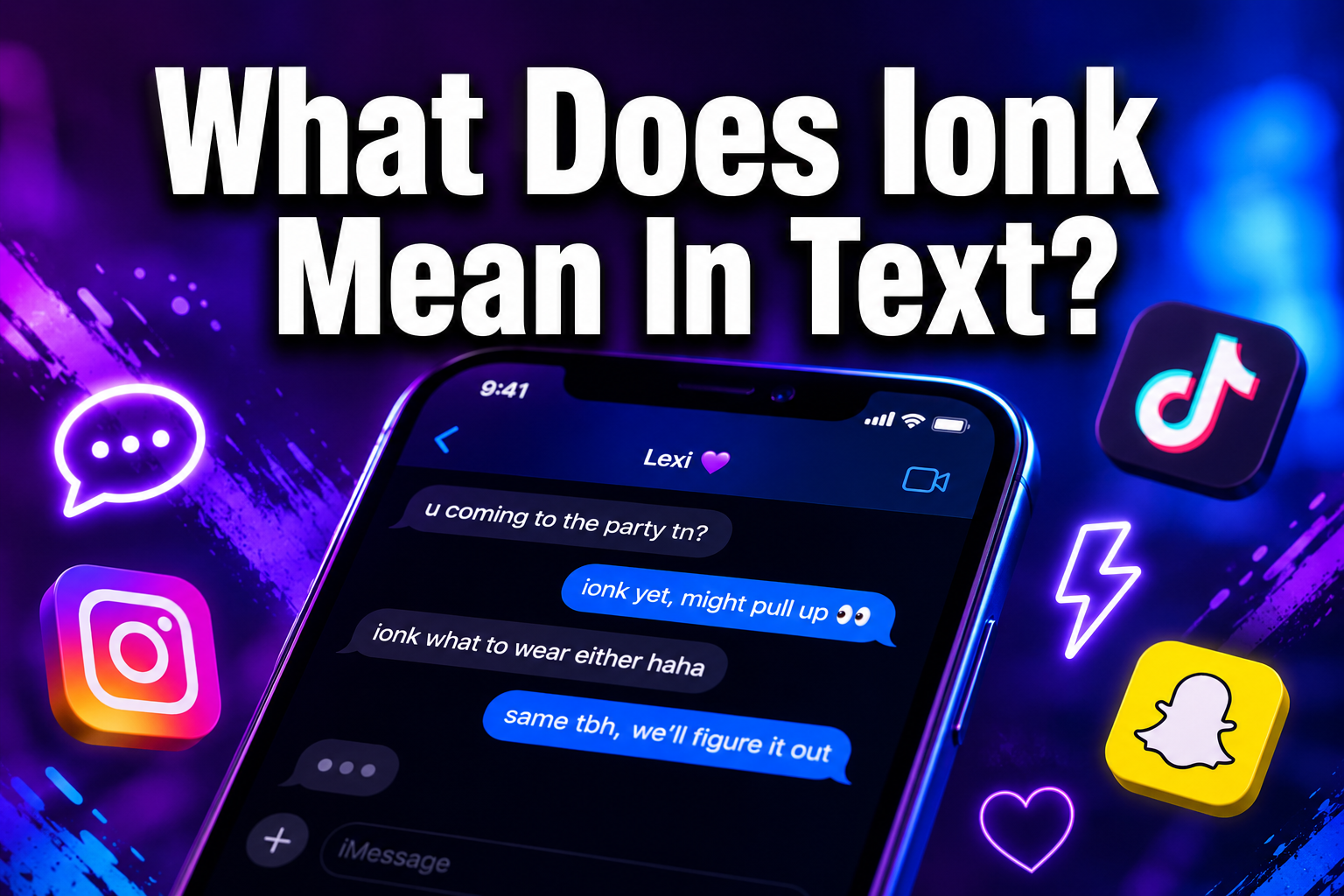
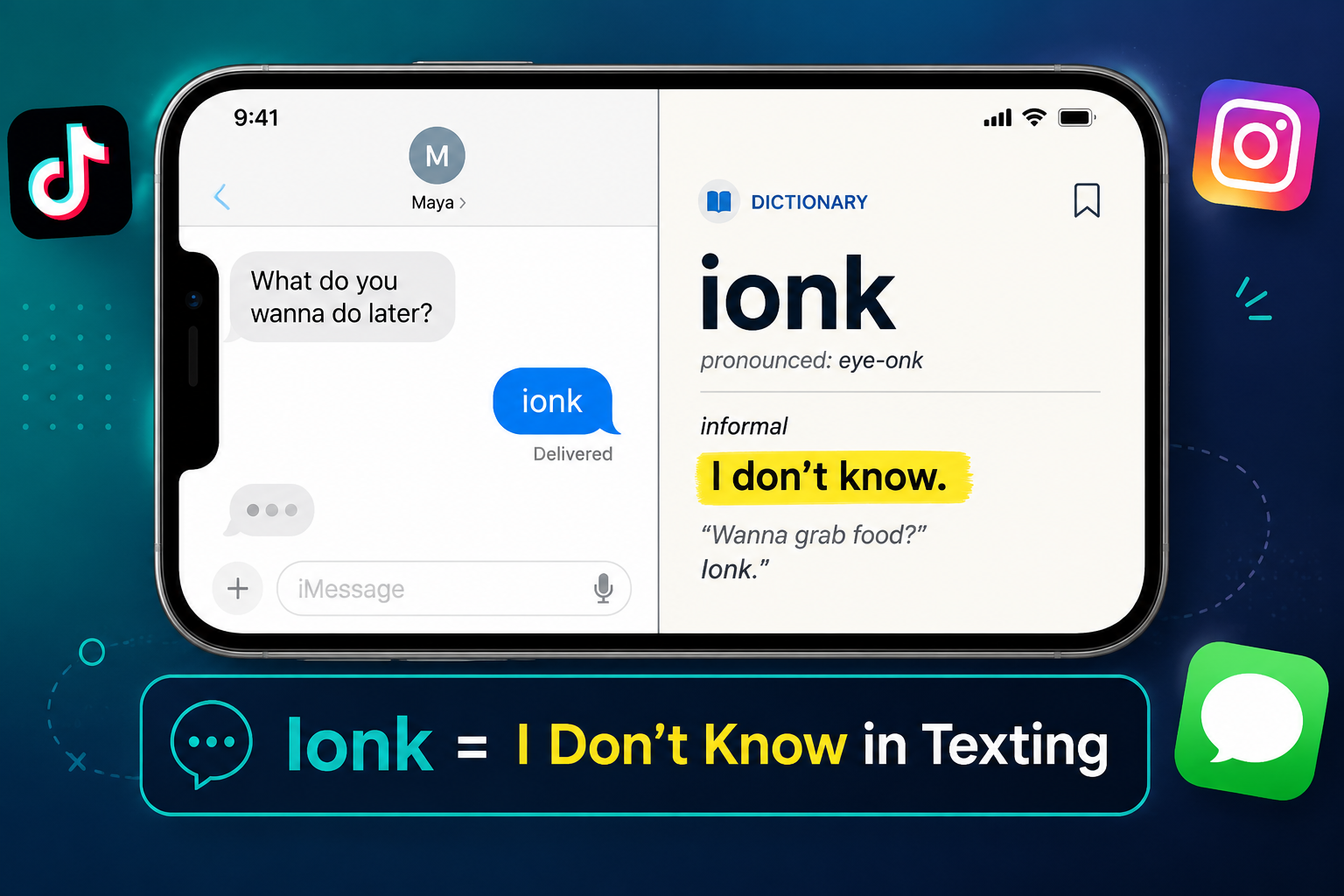
Ionk is a slang term used in texting and online chat that means “I don’t know.” It is a phonetic spelling of the phrase, written the way it sounds when spoken quickly in casual conversation. You will mostly see it used by Gen Z on platforms like TikTok, Instagram, Snapchat, and in everyday text messages.
Key Takeaways
- Ionk means “I don’t know” in text messages and online conversations.
- It is slang, not a formal or dictionary word.
- The term is most popular with Gen Z, though millennials use it too.
- It works best in casual, informal settings, not professional ones.
- Ionk is similar to other short texting abbreviations like IDK, idk, and dunno.
- Context matters: ionk can express genuine uncertainty, sarcasm, or even mild frustration.
- Using ionk in a work email or formal message would be considered unprofessional.
- Alternatives include idk, not sure, no idea, beats me, and dunno.
What Does Ionk Actually Mean in Texting?
Ionk means “I don’t know.” It is a phonetic abbreviation, meaning it is spelled the way the phrase sounds when said fast and casually. Instead of writing out “I don’t know” or even the shorter “IDK,” some people type “ionk” to match the natural rhythm of spoken slang.
For example:
- “What time does the party start?” / “Ionk, check with Jake.”
- “Why did she leave early?” / “Ionk lol”
- “Do you think he likes me?” / “Ionk but maybe?”
The word captures the sound of “I don’t know” compressed into one short, punchy term. That is exactly why it caught on in fast-paced digital conversations.
Is Ionk a Real Word or Slang?
Ionk is slang, not a standard English word. You will not find it in Merriam-Webster or the Oxford English Dictionary. It lives in the world of internet language, texting culture, and social media.
That said, slang is a real and important part of how people communicate. Words like “gonna,” “wanna,” and “lol” started the same way. Ionk follows that same path: informal, widely used, and understood by a specific group of people.
Think of it this way: slang words are real in the sense that real people use them and understand them. They just do not belong in formal writing.
When Did Ionk Start Being Used?
Ionk does not have a single clear origin date, but it started gaining noticeable traction around 2020 to 2022, largely driven by Gen Z communication styles on TikTok and Twitter (now X). The phonetic spelling of “I don’t know” into “ionk” reflects a broader trend where young people type words the way they sound in casual speech.
This trend is part of a larger shift in internet language where users deliberately misspell or compress words for speed, humor, or group identity. Other examples from the same era include “fr” (for real), “ngl” (not gonna lie), and “ong” (on God). You can explore more of these patterns in our guide to Gen Z slang and what it means.
How Do People Use Ionk in Online Conversations?
People use ionk as a quick, casual reply when they do not have an answer. It fits naturally into fast text exchanges, comment sections, and DMs.
Here are the most common ways it shows up:
- As a direct reply: “Ionk” on its own as a one-word answer.
- With added context: “Ionk, maybe ask someone else.”
- With humor: “Ionk lmao, I’m just as lost as you.”
- With sarcasm: “Ionk, it’s not like I’ve been asking the same thing for weeks.”
The tone shifts based on what comes after it. On its own, ionk sounds neutral or slightly unbothered. Paired with “lol” or “lmao,” it reads as lighthearted. Paired with a period and nothing else, it can come across as blunt or dismissive.
Are There Different Meanings for Ionk in Different Contexts?
The core meaning of ionk stays the same across contexts: “I don’t know.” But the emotional tone can change a lot depending on how it is used.
| Context | What Ionk Communicates |
|---|---|
| Casual text reply | Neutral, quick answer |
| With “lol” or “lmao” | Lighthearted, unbothered |
| With a period only | Blunt, slightly cold |
| In a sarcastic sentence | Frustration or irony |
| In a TikTok comment | Relatable, humorous |
So while the definition does not change, the feeling behind it does. Pay attention to what surrounds the word to get the full picture.
Does Ionk Mean Something Different on TikTok Versus Instagram?
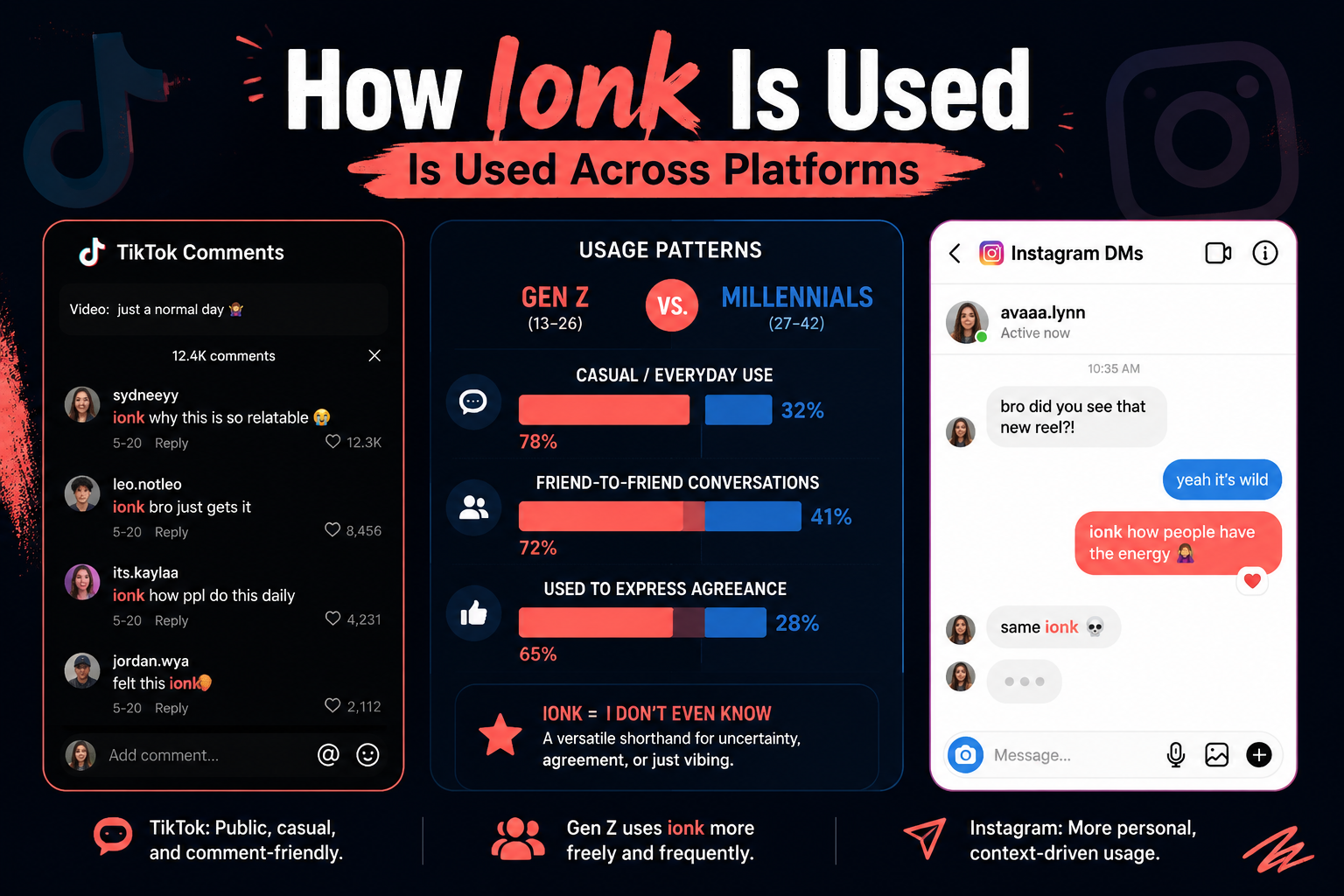
No, ionk means the same thing on both platforms: “I don’t know.” The difference is mostly in how often it appears and in what type of content.
On TikTok, ionk shows up frequently in comment sections under viral videos, especially when someone is asking a question about a trend, a person, or a situation. It is used for humor and relatability.
On Instagram, ionk tends to appear more in DMs and story replies. It is a bit more conversational and less performative than on TikTok.
The meaning stays consistent. The vibe shifts slightly based on the platform’s culture, but any Gen Z user would understand it the same way on either app.
Is Ionk Similar to Other Internet Abbreviations?
Yes, ionk fits into a long tradition of internet abbreviations that shorten common phrases. Here is how it compares to similar terms:
- IDK (I don’t know) – the classic abbreviation, widely used since early texting days
- Idk – same as IDK, just lowercase, which feels more casual
- Dunno – a phonetic shortening, similar in spirit to ionk
- Beats me – informal phrase with the same meaning
- No clue – slightly more expressive version
Ionk is closest to “idk” in meaning and tone, but it sounds more like spoken slang. It is the kind of word that feels natural when you are texting a friend, not when you are filling out a form.
For a broader look at how these kinds of abbreviations work, check out what DWS means in text messages or what WTV means in text.
Why Do People Use Ionk Instead of Just Saying I Don’t Know?
Speed and style. Texting is built for fast communication, and “ionk” takes less time to type than “I don’t know.” But there is more to it than just speed.
Using slang like ionk signals group membership. When you use the same words as your friends or your online community, it creates a sense of belonging. It says, “I’m in on the same culture as you.”
There is also an element of personality. “I don’t know” sounds formal and flat in a text. “Ionk” sounds relaxed, current, and human. It matches the tone of casual digital conversation better than the full phrase does.
This is the same reason people use WDYLL instead of “what do you look like” or TSTS in place of longer phrases.
Is Ionk Considered Professional or Casual Language?
Ionk is casual language only. It has no place in professional communication, including work emails, business texts, client messages, or formal writing of any kind.
If you use ionk in a professional setting, it can come across as:
- Unprepared or careless
- Disrespectful of the recipient’s expectations
- Unclear to anyone not familiar with Gen Z slang
Rule of thumb: If you would not say “I don’t know” in a casual, mumbled way to your boss, do not use ionk either. Save it for friends, group chats, and social media.
Common Mistakes People Make When Using Ionk
Even casual slang has ways to go wrong. Here are the most common mistakes:
- Using it in formal settings: A work Slack message or email is not the place for ionk.
- Overusing it: If every reply is “ionk,” it can come across as disengaged or lazy in a conversation.
- Misreading the tone: Sending “ionk.” with a period to someone who expected a real answer can feel dismissive.
- Assuming everyone knows it: Older adults or people outside Gen Z culture may not recognize it at all.
- Spelling it differently: Variations like “iunk” or “i onk” are not standard and may confuse people.
How Do Gen Z and Millennials Use Ionk Differently?
Gen Z uses ionk more naturally and frequently than millennials. For Gen Z, it is a standard part of their texting vocabulary, used without much thought. For millennials, it is more of a borrowed term, used occasionally to match the energy of a younger conversation or to be funny.
Millennials are more likely to default to “idk” or “no idea,” while Gen Z reaches for ionk as a first instinct. That said, the gap is narrowing as the term spreads across age groups through social media.
If you are curious about how slang evolves across generations, our breakdown of what mewing means on social networks and what glazing means in slang shows similar generational adoption patterns.
Alternatives to Using Ionk in Text Messages
If ionk does not feel right for the moment, here are solid alternatives:
- idk – the most universal option, understood by everyone
- not sure – slightly more formal, still casual enough for texting
- no idea – direct and clear
- beats me – adds a bit of personality
- dunno – phonetic and casual, similar energy to ionk
- I have no clue – works when you want to sound more expressive
- ? – sometimes a single question mark says it all
Choose based on your audience. With close friends, ionk works great. With someone you just met, “not sure” or “idk” is safer.
FAQ
What does ionk mean in a text message?
Ionk means “I don’t know.” It is a phonetic slang term used in casual texting and online conversations, mostly by Gen Z.
Is ionk the same as IDK?
Yes, ionk and IDK mean the same thing. Ionk is a phonetic spelling of the phrase, while IDK is a letter-based abbreviation. Both are informal and casual.
Where did ionk come from?
Ionk grew out of Gen Z texting culture, gaining popularity around 2020 to 2022 on platforms like TikTok and Twitter. It reflects the trend of spelling words the way they sound in fast, casual speech.
Can I use ionk at work?
No. Ionk is casual slang and is not appropriate for professional communication like work emails, business texts, or formal messages.
Does ionk mean something rude?
Not by itself. Ionk simply means “I don’t know.” It can come across as blunt or dismissive depending on tone and context, but it is not an offensive word.
Is ionk used outside the US?
Ionk is primarily used in American English texting culture, but it can appear in any English-speaking online community that follows Gen Z trends.
How do you pronounce ionk?
It is pronounced like “I-onk,” roughly rhyming with “conk” or “honk” with an “I” in front.
Is ionk in the dictionary?
No. Ionk is not in standard dictionaries. It is internet slang and exists in informal digital communication only.
What is the difference between ionk and dunno?
Both mean “I don’t know” and are phonetic spellings of the phrase. “Dunno” has been around longer and is more widely recognized across age groups. Ionk is newer and more specific to Gen Z culture.
Can ionk be used sarcastically?
Yes. Like most casual slang, ionk can carry a sarcastic tone depending on context and what surrounds it in a message.
Conclusion
So, what does ionk mean in text? It means “I don’t know,” plain and simple. It is a Gen Z slang term that captures the sound of the phrase in a short, casual, easy-to-type word. You will see it most in text messages, TikTok comments, Instagram DMs, and Snapchat conversations.
Here are your actionable next steps:
- Use ionk in casual conversations with friends or peers who know the term.
- Stick to “idk” or “not sure” when talking to anyone outside your close circle.
- Never use ionk in professional or formal communication.
- Pay attention to tone: what comes after ionk changes how it reads.
- Keep exploring internet slang to stay current with how language evolves online.
Language changes fast, especially online. Knowing what terms like ionk mean helps you communicate clearly and stay connected to the conversations happening around you.